Tuesday, March 25, 2008

Engineers Test Highly Accurate Face Recognition


Yang's facial-recognition algorithm can correctly determine the true identity of an individual even the image is corrupted or occluded.
Courtesy Allen Yang


You can take off that ninja mask now. A new facial-recognition algorithm created by researchers at the University of California at Berkeley and University of Illinois at Urbana-Champaign is able to recognize faces with 90-95 percent accuracy, even if the eyes, nose and mouth are obscured.

"Most algorithms use what's known as meaningful facial features to recognize people -- things like the eyes, nose and mouth," says Allen Yang, a postdoctoral researcher at UC Berkeley's College of Engineering who developed the new algorithm. "But that's incredibly limiting because you're only looking at pixels from a designated portion of the face and those pixels end up being much smaller than the whole image. Our algorithm shows that you only need to randomly select pixels from anywhere on the face. If you select enough of them, you can produce extremely high accuracy."

Yang's new algorithm, which was created with the help of a team of researchers at UIUC, could mark a quantum leap in face-recognition technology. Current feature-based systems have accuracy that tops out at 65 percent when some form of occlusion is introduced. They also require relatively high-resolution images, and can easily be fooled by changing small details such as adding a mustache, donning a hood or changing one's expression.

The secret sauce in Yang's new method is a mathematical technique for solving linear equations with sparse entries called, appropriately enough, sparse representation (.pdf). While all other facial-recognition algorithms tend to compare a given feature set against all others in a database (generating percentages of likeliness along the way), Yang's algorithm ignores all but the most compelling match from one subject -- basically, its most confident choice.

"It sounds like a simple idea, but by enforcing that one extra constraint you can suddenly see a huge boost in the performance," Yang says.

As Shankar Sastry, the dean of UC Berkeley's College of Engineering, notes, Yang's new facial-detection method also renders years of research in the field obsolete.

"The academic community is really upset," he says. "It sounds terrible. You don't care what features you choose? It flies in the face of many years of research."

Nevertheless, the new technique could pave the way for completely new models for online advertising, new ways of annotating video and still images, and new techniques for monitoring and identifying people in public places.

Yang says he's already been approached by one startup (which he wouldn't name) interested in adopting this technique for what he calls "preannotation." For instance, this technology could automatically add family members' names to each image in a massive photo library, Yang says, saving you the trouble of flipping through thousands of photos to find that one of Uncle Bill.

It's also easy to imagine search engines like Google being interested in automatically recognizing the faces of the humans portrayed in publicly available photos, adding the image data to the textual information surrounding those photos to produce yet another dimension for targeting advertisements. Looking at a party photo of Johnny Depp on a fan site? Google could display advertisements for Sweeney Todd.

This new technique is also bound to raise a series of red flags for privacy advocates, since what Yang has developed is a highly accurate way of recognizing people even with occlusion or distortion.

With more and more cities, retailers and employers deploying security cameras in public places, it's only a matter of time before face-recognition technology like Yang's gets added to these cameras. Then the question will be not just who is watching you -- but whether they know exactly who you are.

Monday, March 24, 2008

Yahoo Vs. Google Moves Up A Notch With 'Attack Ads'

Yahoo is taking off the gloves in its fight with Google for Web users.

The Web portal has launched its first-ever attack ad campaign, claiming that its revamped search service works faster and gets users better results than Google GOOG, the Web's most-used search service.

In one radio ad that began airing nationally this month, an announcer proclaims that "search engines like Google get you lost in all of the links, but not Yahoo (NASDAQ:YHOO) search." The ad also calls attention to Yahoo search's drop-down menu that offers alternative words and phrases users can click as they type in words during a search.

"You won't find that on your Google page," the announcer intones.

Yahoo YHOO has positioned the ad as a humorous reminder that Google isn't the only search service, says Raj Gossain, vice president of marketing for Yahoo search.

"We're not trying to be nasty to them; I have a tremendous amount of respect for what they have done," Gossain said. "But our challenge as the No. 2 player in the market is to remind users that there is an opportunity to make a choice."

March figures aren't available, so it's uncertain if the ads are working. In February, Google's share of Internet searches in the U.S. rose to 59.2% from 58.5% in January, according to comScore Networks. Yahoo's share slipped to 21.6% from 22.2%.

Many people don't even know that Yahoo offers Web search, Gossain says.

"It's just a habit that people have of always going to the site of our friends up in Mountain View," he said, referring to Google's Silicon Valley home base.

Shahid Khan, a partner at IBB Consulting Group, says that Yahoo needs to act, but that using attack ads is surprisingly bad form on Yahoo's part.

"It just shows how desperate Yahoo has become that they would stoop to this level," Khan said.

But Barry Parr, an analyst at Jupiter Research, calls the ads a worthwhile gamble.

"They have a tough problem and not a lot to lose" by trying the ads, he said.

Yahoo remains the most-visited Web property, but it hasn't gained ground in search against Google. Worse, earnings and sales gains have stalled in the last year-plus, and it's the subject of an unsolicited takeover attempt by another fierce Google rival, Microsoft (NASDAQ:MSFT) MSFT.

Yahoo revamped its search service in October.

The new service gives users more than just links to Web sites. For example, a search for "10,000 B.C. movie" gives users a little box with viewer ratings, a link to a description of the film and a list of showtimes at local theaters.

Yahoo is trying to give its users short cuts to the information they want, Gossain says.

"We try to package a lot of great information, basically giving users answers they are looking for right at the top of the page," he said.

Some of Yahoo's new features aren't unique. Search company Ask, Ask a unit of IAC/InterActiveCorp (NASDAQ:IACI) (OTCBB:IACPP) IACI, offers a similar drop-down menu for Web search users. Google is testing such a feature.

"Yahoo is doing some interesting stuff, but it's pretty consistent with what everybody is doing with search," said Greg Sterling, head of Sterling Market Intelligence.

Google has never paid for ads to push its search service.

"We welcome competition that helps deliver useful information to users and expands user choice," Google said via e-mail when asked about Yahoo's new ad campaign. "Having great competitors is a huge benefit to us and everyone in the search space -- it makes us all work harder, and at the end of the day our users benefit from that."


Newstex ID: IBD-0001-23988742

Originally published in the March 25, 2008 version of Investor's Business Daily.

Copyright (c) 2008, Investor's Business Daily, Inc. All rights reserved. This article is protected by United States copyright law and may not be reproduced, distributed, transmitted, displayed, published or broadcast without the prior written permission of Investor's Business Daily, Inc. You may not alter or remove any trademark, copyright or other notice from copies of the content

Before the test drive, cruise the Web

A few weeks ago, I received a dreaded phone call at 8:30 a.m. telling me he wasn't going to make it. The "he" in this case was my car, and the bearer of bad news was my mechanic. My 1994 Saab bit the dust when its timing belt broke, and after discussions about the cost of the repair versus the value of the car, I accepted the fact that I'd need to start looking at buying another vehicle.

I headed online to start researching (I was looking for a used car) but was overwhelmed by an avalanche of information. Everyone seemed to have something to say about cars, whether in blogs, community forums, editorial reviews, Kelley Blue Book values, Carfax reports or local dealer sites. As I discussed my findings with friends and family, more people than not were surprised to hear about the variety of research and price comparisons available online.

This week's column is an overview of sites that may help you or someone you know browse for a new or used car on the Web. I used sites ranging from trusted resources like ConsumerReports.org to search engine tools like Yahoo Autos. This column can't possibly mention every car-searching resource on the Web; rather, it's just a taste of what's available.

Edmunds.com and ConsumerReports.org both feature informative data on a number of new and used vehicles. Edmunds is a free site specifically geared toward cars, including an online magazine for enthusiasts called Inside Line and a Web forum for discussions about automobiles called CarSpace. I used various tools on Edmunds.com, including one that estimates the true cost to own a specific car over time. I especially enjoyed reading an article titled "Confessions of a Car Salesman," which proved uncanny in predicting a range of tricks and techniques the salespeople used when I first visited a car dealership.

story continues below


Edmunds offers a four-step pricing system, which includes getting quotes from dealers, and a payment calculator, which estimates monthly payments. Edmunds teams up with AutoTrader.com to help perform searches for certified pre-owned or used cars online.

Consumer Reports covers products as well as cars but keeps much of its most useful data behind a Web site subscription, which costs $26 annually or $5.95 monthly (magazine subscribers can pay a discounted price of $19 a year). You need this subscription to access CR's respected ratings and certain sections of its Web forums. These ratings were helpful to me, as they assessed numerous aspects of specific car models, including trouble spots by year, performance, safety and fuel economy.

CR offers valuable lists such as "All Recommended Cars," "Best and Worst Used Cars" and "Reliable Used Cars by Price." A car-buying calculator is an asset to this site that helps you decide whether it would be smarter to buy or lease a vehicle.

Google, Yahoo and AOL all present special search-results pages when you search for a specific car for sale, using drop-down menus and various ways to sort results. Google Base for automobiles, found by selecting "Vehicles" from www.google.com/base, is a list of data submitted to Google. Drop-down menus help broaden or narrow results by sorting the data according to certain attributes, such as make or price. Vehicle-search results can be viewed in one of three formats: List View, Table View or Map View -- an illustration of each car's location in relationship to a Zip Code. I found Table View most useful because it organized data in smart, spreadsheet-like displays so I could quickly skim through columns listing price, color, amenities and mileage.

But not all car searches within Google Base returned the same drop-down-menu options for sorting. In a few instances, I couldn't sort my search results by model year. Google Base does show the date on which each car was listed.

Yahoo Autos teamed up with Cars.com to offer richer content, including a Car Finder feature that helps people narrow down what type of new car they might like according to price, driving style and fuel (type and economy). Yahoo even tries to answer car questions with its Yahoo Answers Q&A tool, which lets people submit questions. I found user reviews on this site, as well as expert reviews provided by NewCarTestDrive.com, an auto-review site.

The used car section in Yahoo Autos reminded me of Google with its drop-down menus and results that displayed in list or map views. List view shows plenty of information in one glance, including an image of the car for sale and the number of additional available photos. From this list, users can link directly to view or order Carfax reports or email the dealer, saving time wasted on excess mouse clicks and browsing.

AOL Autos does a nice job of integrating Web 2.0 features such as pop-up menus that appear within a page rather than in an entirely new Web page. Vehicle search results are found by entering a few criteria for a new or used car, and used-car results can be further narrowed by adding or subtracting desired specifics listed on the far left of the screen. Some specs include model type, engine, year or extras like heated seats or a sunroof.

This site can condense numerous used car listings into one graph that illustrates car prices in relationship to mileage or year. Selecting any point on the graph reveals a short description of a vehicle's location, price and mileage. For new cars, AOL Autos offers lengthy expert reviews from NewCarTestDrive.com, as well as user reviews.

Both Yahoo Autos and AOL Autos walk users through steps to get price quotes from dealers for new cars.

Carfax.com provides car-history reports using vehicle-identification numbers, or VINs. For a $30 fee, used-car buyers can use Carfax.com for 30 days. This report shows a vehicle's history such as if it was a rental or not, how many different owners it had, how long each owner possessed the vehicle and where it came from. Tips pop up within these reports, including one that warned me about "curbstoning," a term that describes an individual without a dealer's license looking to sell a number of cars by posing as a private seller.

As can be expected, many newspaper Web sites offer automobile sections that display digitized classified ads, so be sure to check your local paper's Web site.

At the end of the day, test-driving a car will be a true test as to whether or not you like it -- no matter how much research you've done online. But knowing your stuff before you visit a dealership can save money and time.

Hands On: Microsoft Office Live Workspace

Microsoft is synonymous with the ubiquitous Windows operating system. But its Microsoft Office productivity suite pulls in more revenue than any version of Windows. Competition from Web-hosted productivity applications like Google Docs and Zoho Office has changed the rules of the application-suite game, however, threatening Microsoft's desktop application revenues and forcing it to address the growing popularity of Web-hosted applications with new features and products.

Microsoft&#39s Office Live Workspace--click for full-size image.

The obvious move would be to offer free, ad-supported, feature-limited online versions of Office's flagship applications designed to compete head-on with Google's and Zoho's word-processing, spreadsheet, and presentation programs. Microsoft's free Office Live Workspace, however, takes a different tack by providing private and public shared online file areas, or workspaces, that are tightly linked to Office's desktop applications via a downloadable plug-in.

Though it lacks advanced workflow, communications, and project management features, Office Live Workspace has more in common with collaborative Web services like Basecamp and Central Desktop than it does with Google's or Zoho's online suites. Currently ad-free, Microsoft says the site may eventually include advertising.

A file in Workspace--click for full-size image.

Office Live Workspace anticipates the kinds of jobs you're likely to collaborate on, providing prefab workspace templates geared to specific business, school, and home tasks such as organizing a group meeting, launching a product, writing a term paper, throwing a party, or managing a little-league team. Individual templates contain document templates designed for the task, such as a project proposal outline in Word or a presentation in PowerPoint.

Office Live Workspace supports Excel files, too, though none of the templates available when we reviewed the site were Excel files. On the other hand, the service doesn't support Microsoft's Access database format, which is too bad--Access users looking to delegate data entry and to simplify reporting tasks might benefit greatly from an online database-sharing arrangement.

You can view documents in the three supported Office file types online, but to edit the files, you must download and open them in your local copy of Word, Excel, or PowerPoint, or in a compatible suite such as OpenOffice.org, and then reupload them when you're done editing.

Emulating a handy feature pioneered by Zoho Office, the service also lets you open, edit, and save files directly from your Microsoft Office 2003 or 2007 applications to your online folders, using a downloadable toolbar plug-in. Besides working in the supported Office file types, you can create, view, and edit several other types of files--Events, Contacts, Task Lists, and Notes--via the Web interface, and sync these with the corresponding information types stored in your local copy of Microsoft Outlook. The site lets you create one other file type--a spreadsheet-like list--and export it to Excel format if you wish. You can upload other file types, too. The site simply displays an error message if you try to view or edit unsupported file formats.

Office Live collaboration--click for full-size image.

If you work with only a few collaborators, Office Live Workspace provides just the right combination of file-sharing controls and ease of use. As the workspace administrator, you create a new shared workspace and then invite other users by e-mail to join it, either as viewers (who can see but not modify files) or as editors (who can see, create, and modify files). You can share workspaces with invited users, make them public, or keep them private. Files are easy to move from one workspace to another. Though you can't share individual workspace files, you can share individual files that are stored in the default 'Documents' folder.

Office Live Workspace displays a log of file creation, editing, and deletion activity, and the administrator can retrieve an earlier version of a file if an editing snafu occurs. If you add the SharedView utility, a small download that's still in beta, you can share your screen and its applications with other workspace users--a feature that several other collaboration services offer as well. Only one user at a time can control and edit a document via SharedView, however. If you need tighter controls over file access, or other workflow tools like e-mail reminders of project milestones and due dates, choose a more powerful collaboration service.

You'll also want to look elsewhere if your projects involve lots of large files. While other online storage services--including Google, Zoho, and Microsoft's own Windows Live Spaces--offer gigabytes of free storage, Office Live Workspace gives you just 500MB, with individual file size limited to 25MB. But if you and a few of your coworkers or family members want to collaborate in a lightweight fashion using Microsoft Office apps, Microsoft's unique response to Web-hosted applications could be a free and easy no-brainer.

Open source: It's time to get down to business

March 24, 2008 (Computerworld) Don MacAskill calls himself a "huge fan" of open-source software in general, and the MySQL database in particular. MySQL is one of the core technologies used at SmugMug Inc., an online photo-sharing service, where MacAskill is CEO.

But now MacAskill finds himself hoping that MySQL can be rescued and righted by Sun Microsystems Inc. -- a traditional IT vendor, albeit one that has fully embraced the open-source process in recent years.

Sun's acquisition of MySQL AB last month is the biggest in a series of steps that vendors have taken to try to improve the open-source experience for corporate users. That's becoming a pressing need as more companies adopt open-source software -- and as vendors push hard to increase the adoption rate even further.

But there's still a long way to go to soothe user concerns over issues such as the timely delivery of new features and bug fixes, the need for more predictable product road maps, and the lack of IT workers with open-source skills and experience.

At SmugMug, for example, MacAskill is still waiting for fixes to a scalability problem that led him to write in a January blog post that he was "seriously considering" not renewing the company's MySQL Enterprise support contract when it expires later this year.

As SmugMug adds more processor cores to its MySQL servers, performance isn't increasing like it should, MacAskill said. The problem stems from concurrency problems between MySQL and InnoDB, the most widely used storage engine for the database.

MacAskill said he and other users tried for years to get MySQL to address the glitches, "and all we got back was radio silence." Eventually, users such as Google Inc. developed their own patches in an effort to fix the performance problem, but MySQL has been slow to incorporate the patches into the database.

Zack Urlocker, MySQL's executive vice president of products, said in a response to MacAskill's January blog post that MySQL had added some fixes to new database releases and was reviewing Google's patches. MySQL was also looking forward to tapping into Sun's "great expertise in scaling performance," Urlocker wrote.

MacAskill said he hopes that Sun, which he viewed as an IT dinosaur a few years ago, can solve the scalability problem. And despite the nature of open source, he would prefer that the fix come as part of the vendor's support of the database. "We have our own product to build here," he noted.

The uncertainties of the open-source development model continue to drive some corporate users away. For example, Dale Frantz, CIO at Auto Warehousing Co., considered desktop Linux before deciding last year to replace the new-car processing company's PCs with Macintosh systems.

The problem, Frantz said at Computerworld's Premier 100 IT Leaders Conference this month, was that when he talked to people in the open-source community, they mostly "wanted to know what we could do for them." In the end, he added, "we had to do what was best for Auto Warehousing Co."

Another big issue is the split development model that many open-source vendors have adopted for the enterprise and community versions of their products.

Jeremy Cole, a former MySQL user at Yahoo Inc. who is now a consultant at Proven Scaling LLC, said that MySQL has been updating its enterprise database release more often than the community version. As a result, he said, "while enterprise users are getting fixes faster, they're essentially running untested code."

n addition, Cole said, users such as Google and Yahoo have long had to either live with a variety of shortcomings in MySQL's software or do the development work themselves.

Cole wrote in a blog post in January that he thinks Sun "has a very good chance of leading MySQL better than MySQL" did. As of last week, though, he had yet to hear of any planned changes to MySQL's development model or release schedule.

Bill Parducci, chief technology officer at Think Passenger Inc., which builds online communities for companies and their customers, noted that Linux vendor Red Hat Inc. doubled the length of its new-release cycles several years ago because of pressure from users who were having trouble keeping up with its updates.

In addition to Red Hat Enterprise Linux, Think Passenger uses open-source technologies such as the CentOS version of Linux, the Jetty Web server and Iona Technologies PLC's Fuse Message Broker.

Parducci is satisfied with most of his open-source vendors but sees room for improvement, particularly among the smaller ones. They need to cultivate their communities and ensure that they have timely feedback loops so that business users can get the technical help they require, he said.

More comprehensive and reliable product road maps would help as well, according to Gautam Guliani, executive director of software architecture at Kaplan Test Prep & Admissions.

The division of Kaplan Inc. uses a small assortment of open-source software, including Red Hat Linux and Red Hat's JBoss middleware. Getting timely support from the open-source vendors hasn't been a problem for Guliani. But in some cases, he said, "the development road map isn't thought out as much as we'd like."

Jonathan Schwartz, Sun's CEO and president, said after the announcement of the MySQL acquisition in January that the open-source vendor's inability "to give peace of mind to a global company that wants to put MySQL into mission-critical deployment" had been a big impediment to its growth. To try to rectify that, Sun plans to offer new MySQL support services worldwide.

Red Hat is also pushing to make it easier for corporate users to deploy its JBoss middleware. Last month, the company said it was setting up new performance-tuning, application certification and technology migration centers for prospective JBoss users. And on March 13, Red Hat said it had bought open-source systems integrator Amentra Inc. specifically to work with JBoss users.

Also, Novell Inc. and SAP AG last week said they're working to optimize Novell's SUSE Linux Enterprise operating system for users of SAP's ERP applications.

Baldor Electric Co. in Fort Smith, Ark., has been running its SAP applications on an IBM mainframe with SUSE Linux for the past three years. Mark Shackelford, Baldor's vice president of information services, was skeptical at first about moving the SAP applications to Linux. "But it's more stable than any proprietary Unix that we had," he said.

SmugMug's MacAskill is counting on Sun to bring some stability and better scalability to MySQL, even though he hasn't seen any changes yet. "I think it's a new phase of MySQL's life," he said. "It's fascinating watching this, really."

Craig Stedman contributed to this story.

Web 3.0 And The Features That Wow Many Users

For those who are in the dark, the web has numbered versions. Not too many people know this truth but, a few years back, a guy named Dale Dougherty envisioned Web 2.0. This is despite the fact that the whole world was in chaos because of the crash of the dot-com. People were losing hope that the Internet would ever rise again but Dougherty never gave up. The Web 2.0 Conference in 2005 gave way to the birth of the World Wide Web.

Web 2.0 has come to depict practically each site, technology, or service which are promoting collaboration and sharing even down to the Internet’s roots. Blogging, tags, wikis, RSS feeds, Flickr, del.icio.us, MySpace, and YouTube were the first fruits. The world has been a witness to the evolution of the Web from its 1.0 phase to Web 2.0. Looking at the great developments on the web’s history, people are wondering what is in store for those who would be able to witness the coming of Web 3.0.

Net technologies are constantly evolving: in the minds of geniuses in universities, in prime corporations, and many other great minds out there. Most of the online population coin the term Semantic web to Web 3.0. This is somehow in connection to Tim Berners-Lee’s invention of the World Wide Web.

Basically, Web 3.0 is a location where web pages are read by machines just like humans read them. This is also a place where search engines abound. Looking at it on a layman’s perspective, it simply means a single database for the whole world (well, this is not quite simple when you begin to fathom the work it’s going to take to make this happen).

Some are skeptical about the birth of this modern Internet idea of Berners-Lee in 2001. He began with an idea where the Semantic Web can have agents that would take care of people’s schedules (even down to the setting of appointments). Semantic web agents can be programmed to do just about anything else (processing of research papers or even booking vacations). All it takes for these agents to become a reality, according to its author, is for the web to be re-annotated.

Nowadays, Web 3.0 is more than just a dream. Official standards which describe the metadata that would make information machine readable are now practically everywhere—they are already in place in RDF (Recourse Description Framework), OWL (Web Ontology Language), there is even a development platform in HP called Jena and structures are to be found in the Spatial database tool of Oracle.

The technology of Web 3.0 is evident in Google Gears which allows users to create web applications even when offline. The Adobe Flash player lets application developers have some access to the microphone and webcam. Pretty soon, it would be possible to drag then drop files from the desktop all the way to a web browser.

More awesome features await those who would want to experience Web 3.0: spectacular graphics, hi-def video and audio, seamless animations, and 3D. The present day’s generations of web front-end engineers are very lucky to have Web 3.0. Fragmentation which could result when technologies skyrocket could be moderated with the use of JavaScript toolkits.

These could very well be the vision that Berners-Lee saw. It’s more than just storing and sharing information now—the Internet could do far more complex actions that would make Web 1.0 and Web 2.0 seem ‘Neanderthal’ in comparison.

7 tools to track your blog Visitors

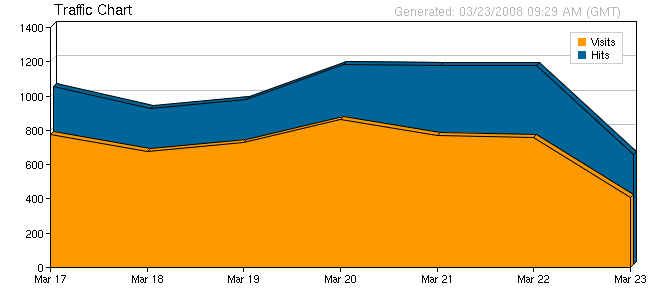
For any blogger, checking blog statistics to assess whether more or fewer people are reading what he writes is very important. For instance, which type of content visitors are reading, which country is contributing to maximum number of users and page views. For tracking the website or blog visitors there are many free tools available on internet. The process of using these tools is very simple. Just you have to register on their site, add your blog to the control panel and then add their piece of code inside the body of your blog. I have collected information on 7 most popular blog or website tracking tools on internet. Let’s discuss one by one.

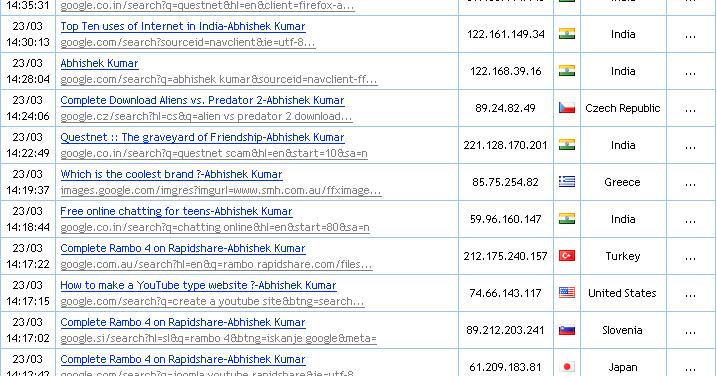
IceRocket Blog Tracker :: It is a completely free invisible tracker that will count your blog visits and other blog statistics. All you need to do is register for an account, add your blog and insert a small piece of code into your blog so after adding the code, the tracker starts gathering statistics for your blog. Then you will be able to analyse and monitor all the visits to your blog in real-time. It is very efficient tracker so I use it for my blog.

traffic_abhisays_icerocket.png


abhisays_tracker.JPG

Google Analytics :: It is another famous tool for tracking website visitors by Google. It is very easy to use and has very clean interface. It provides comprehensive details of the traffic, its traffic pie charts and graphs are very effective in analyzing the growth of the website. It is one of the most widely used tracker across the internet.

Salient features of Google Analytics –

  • Just paste the Google Analytics tracking code into each of your website pages and tracking begins immediately.
  • It tracks and compares all your ads, email newsletters, affiliate campaigns, referrals, paid links, and keywords on Google and other search engines.
  • You can buy keywords on Google AdWords and use Google Analytics to learn which keywords are most profitable to your business.
  • Trace transactions to campaigns and keywords, get loyalty and latency metrics, and identify your revenue sources.
  • With google analytics, you can find out where your visitors come from and identify your most lucrative geographic markets.

SiteMeter :: Site Meter’s comprehensive real time website tracking and counter tools give you instant access to vital information and data about your sites audience. With the detailed reporting you’ll have a clear picture of who is visiting your site, how they found you, where they came from, what interests them and much more.

Webalizer and Awstats :: My hosting site hostgator is providing two different web stats programs on the log files for this site Webalizer and Awstats. With every cpanel hosting these trackers come free. For tracking the website you don’t need to do anything, they automatically starts tracking when your site becomes online from that server. Webalizer doesn’t distinguish between human visitors and automated requests (bots etc.), whereas AWStats tries to distinguish between the two. So in my opinion, you can rely on Webalizer stats.

StatCounter :: A reliable free invisible web tracker, highly configurable hit counter and real-time detailed web stats. Just you have to register on the site and insert a simple piece of our code on your web page or blog and you will be able to analyse and monitor all the visitors to your website in real-time.

MyBlogLog :: It is the largest blogging directory and community on internet that also provides statistics tracking to registered users of the site. Registration is free. However, the statistics provided by MyBlogLog are not as robust as those provided by other stat trackers like sitemeter, icerocket, statcounter, google analytics etc.

Out of these 7 trackers, I use all of them except google analytics and statcounter. But if you are running a blog and want a good tracker, then I will recommend icerocket’s blogtracker.

Google Docs: Spreadsheets Now With Gadgets

google docs


It seems Google way to compensate their shortcomings and lack of features in their Docs offering will be through Gadgets, and i must say that is quite a smart move on their behalf, after all, they have invested a lot of money, resources and time in developing a very robust Gadget Platform so, why not bring that into Google Docs too?.


The first step in this direction is in the Google Spreadsheets where now you will be able to select Gadget while working on them.


The new gadgets work thanks to a new data visualization API that is tied to the gadgets, so the gadgets nature at this moment are information displays and visualization laden gadgets, the spreadsheet gadget can also be reused as iGoogle Gadgets and if a change is made into the document linked to a certain Gadget, the gadget will also update the data and display such changes.


doc gadgets


This is without a doubt a interesting development and i wonder what else they plan to do with something like this.


Google Docs


If you want to know more about this, you can use the following link:


Google Spreadsheets Adds Gadgets via Google Operative System


Technorati Tags: , , , ,

Google "Gadgets" provide new way to look at data

BEIJING, March 20 (Xinhuanet) -- Search engine giant Google unveiled Gadgets for Spreadsheets in Google Docs on Wednesday, allowing people to create graphical representations of data in spreadsheets and publish them on Web sites.

New nifty features added provide consumers new ways to look at data in their spreadsheets. Google has put up a gallery of specialty gadget to choose from. They include gadgets to display data on a pie chart, map, time chart, funnel chart, Gantt chart, pivot table, and on a heat map if it's geographical data. Users can even create interactive charts like those used by Google Finance and for motion charts.

These visuals can also be pushed out to appear on an iGoogle home page or any other site and will be dynamically updated as changes are made to the spreadsheet.

Google is doing something interesting with its Gadgets platform, making gadgets a data source for spreadsheets as well as a data distribution method for developers.

These new features are reported to be added to their other tools (Word Processor and Presentation) in the future.

Jonathan Rochelle, senior product manager for Google Docs spoke about these new features, "If we have a new idea for visualizing data, we can create that as a separate feature that can be pushed out to users of Google Docs' spreadsheet."

(Agencies)

Google searches rules to pay overdue taxes

BEIJING, March 22 -- Google Inc, owner of the world's most-used internet search site, said it paid back taxes on the income of some of its employees in China.

"After discussions with the appropriate tax authorities and clarification of the tax rules as they applied to Google China, the company paid taxes that were overdue," the California-based company said.

"Google did not evade payment."

The Shanghai Securities News yesterday reported that Lee Kai-fu, Google's president in China, paid five million yuan (708,600 U.S. dollars) in back taxes after an audit by Chinese tax authorities.

Google declined to comment whether Lee was among the employees that didn't pay taxes on time, Bloomberg News said.

Google hired Lee from Microsoft Corp in July 2005 to run the company's development center in Beijing, but Microsoft sued to stop Lee, saying he would be violating an agreement not to work for a competitor for a year.

Tuesday, March 18, 2008

Google Apps get mixed

Nestled in the peaceful Riverina district of southern NSW, De Bortoli Wines' headquarters is 570 kilometres from Sydney's bustling central business district.


But as the first sizeable Australian company to use Google Apps in an enterprise setting, the relevance of De Bortoli's trial stretches far beyond the grapevines to other organisations cautiously sniffing the technology.

Travelling less traditional technology routes is nothing new for the privately owned winemaker. Its chief information officer of 10 years, Bill Robertson, has long been committed to open-source computing and trialled the Linux operating system well in advance of his contemporaries in 1999.

These days, De Bortoli runs Linux on about half its desktops. The business has standardised on the Open Office software suite for its 550 employees and implemented open-source systems for project management, intranet content management and risk assessment.

In mid-2007, 10 sales and support staff at De Bortoli's Brisbane office kicked off a Google Apps pilot. The company was specifically seeking to exploit Google Apps's online collaboration features and allow access to applications for on-the-road sales representatives at minimal cost and effort to Robertson and his IT staff.

"Open Office is free but it still requires help with installation, ensuring hardware is up to specification and ongoing support," says Robertson.

"We avoid most of that with Google Apps and our sales reps can access spreadsheets, word processing, calendaring and email without us needing to provide or maintain end-user software."

Fast forward three months to September 2007 and De Bortoli's entire quality-control department was using Google Apps's free standard edition, primarily to collaborate internally and with staff at offshore packaging plants.

"Emailing spreadsheets back and forth is a poor way to transfer data and building applications to manage this requires a lot of infrastructure," says Robertson. "Google Apps is a good way for staff to work simultaneously."

The pilot at De Bortoli has since been extended to a trial incorporating 130 users from core business units. Google Apps utilises one of De Bortoli's domains, that is, users have a company email address and the IT team can centrally manage accounts via administrative controls. If problems arise with staff, or they leave the company, accounts can be decommissioned or otherwise managed.

Robertson is pleased with Google Apps's collaboration features and says version control issues are addressed by its single source of truth capabilities and wiki-style revision history. He is also impressed with its integrated calendaring capabilities and says it's handy to merge his private Gmail calendar with work commitments.

"If my work and private life conflict, I get flagged because my daughter and wife use Google calendars too."

But there's a flipside, Robertson says. Google's shallow background in servicing the enterprise market is highlighted by insufficient back-up functionality. While most companies back up crucial data offsite, De Bortoli's logic is to back up onsite since data is already hosted offsite with Google Apps.

De Bortoli developed and gifted Google with a utility to automate this back-up process. All was rosy until the utility stopped working.

"Google changed the way its authentication scheme worked and it broke," says Robertson. "It really highlighted the risks involved in using online applications where you can't necessarily control the final outcomes."

Until Google addresses the back-up issue, De Bortoli will not extend the trial. And, while someone as opposed to proprietary software as Robertson could be dismissed as overly critical, his disappointment with the back-up utility makes him wary of putting all his eggs in the Google basket.

"Google is good with providing APIs to access data but we remain dependent on their proprietary software," he says.

These discomforts aside, Robertson says the trial fulfilled his expectations and believes Google Apps could "absolutely" scale up to a larger enterprise. But for companies looking to entirely replace Microsoft or Open Office, Google Apps's more limited feature set might still disappoint, he warns.

In early 2007 Google Apps released a Premier Edition costed at $50 a year per user with greatly increased storage for individual users. Robertson perceived this additional storage as a back-up risk and baulked at the idea of upgrading.

"I don't want to make the problem worse by purchasing more space," he explains. "We have hit the limits of where we can go for now, but Google is a smart company and I think they will catch on."

Robertson says he's learnt a lot by trialling new technologies: "You think you can imagine the future benefits of technology but it's only when you arrive that you realise the sum of the limitations."

- Australian Financial Review


Beware 'unbalanced' Enterprise 2.0

While bosses ponder how social networks can help their employees collaborate, De Bortoli's chief information officer, Bill Robertson, sticks to social contracts instead.

Social networking is one plank in a raft of tools known as Enterprise 2.0. If prevailing wisdom exists with such an emergent concept, it suggests companies that deploy Enterprise 2.0 tools should relax their grip and allow participation and structure to emerge spontaneously.

Robertson disagrees.

"There's an assumption that if you build it, they will come," he says. "In theory this is true, but our experience suggests it will be unbalanced. Some bright sparks will always be keen but it depends on their skills and background."

His definition of Enterprise 2.0 is based less around specific technologies and more around how they are used. He says De Bortoli has years of practical experience using technology in a collaborative environment and points to its open-source intranet content management system as an example.

For three years, De Bortoli staff have been able to create, link and edit intranet content.
"It's been a staggering success in places but has also shown us the limitations of the model," says Robertson. "Some departments really fleshed it out and others accept it's a good idea but don't have the resources or need to contribute."

To some extent, Robertson gets around the issue by providing training, much of which is placed on the intranet for self-training.

"I have a social contract to treat all staff equitably," he says.

Robertson also bucks the trend that assumes a good dose of Enterprise 2.0 salts is necessary to dissolve organisational hierarchies.

"For companies that don't obsessively adhere to organisational charts and already encourage free and frank discussion, some of these solutions aren't as appropriate," he says.

MyMedicalRecords.com Collaborates With Google on Personal Health Records

LOS ANGELES, CA -- 03/17/08 -- MyMedicalRecords.com, Inc. ("MMR"), a leading provider of Web-based Personal Health Records ("PHRs"), announced that it will be integrating with the Google Health platform, which is expected to be launched later this year.

Google's CEO, Eric Schmidt, previewed Google Health at the annual conference of the Healthcare Information and Management Systems Society (HIMSS) held last month. The company also announced that it is testing the Google Health product in a pilot program with the Cleveland Clinic.

MyMedicalRecords.com is collaborating with Google Health to build a two-way interface that will enable users of Google Health to transfer information from their Google Health account into an MMR account and vice versa.

MMR is a highly-secure, easy-to-use, and comprehensive personal health record (PHR) that uses proprietary, patent-pending technology to give patients and healthcare providers the ability to upload images, such as x-rays, CT scans, and MRIs, fax medical records and other important documents, and to have doctors' notes dictated into an account. The information is then accessible from any Internet-connected computer anywhere in the world with no special hardware or software. An Emergency Login feature enables an Emergency Medical Provider to access important information in the event of a medical emergency.

"Once launched to the public, we believe Google Health will enable healthcare providers and patients to share vital information," said Robert H. Lorsch, CEO of MyMedicalRecords.com. "We are excited to have the opportunity to integrate with Google Health and look forward to individuals using MyMedicalRecords.com in conjunction with all the features and benefits of Google Health."

ABOUT MYMEDICALRECORDS.COM

MyMedicalRecords.com, Inc. (MMR) is a leading provider of Web-based personal health record and vital document storage solutions available to consumers, employers, healthcare providers, insurance companies and brokers, unions, professional organizations, and government agencies enabling individuals and their families to have greater control over their health and well-being. MMR also provides physicians with a low-cost way to digitize their patient back files and day-forward files on a just-in-time basis. Using proprietary patent-pending technology, MMR offers an easy-to-use, secure and convenient online personal health record (PHR) solution that enables documents, images and voicemail messages to be transmitted in and out of the system using a variety of methods, including fax, file upload and e-mail. MyMedicalRecords.com also serves as a virtual safe deposit box for storing any important documents, including insurance policies, financial records, advance directives, deeds of trust and wills, providing an emergency-preparedness tool that protects valuable information from being lost or destroyed by fire, flood, earthquake and other disasters. For more information visit www.MyMedicalRecords.com.

Now use Google Analytics to Track Google Docs

Now use Google Analytics to Track Google Docs


Since the release of Google Docs, it constantly has seen new developments, with the most recent addition till now being the Offline accessibility option. But now as if it all wasn't just enough, you can now track your published documents with Analytics. This change was first seen and reported by Blogoscoped.


In order to track your published content, you would need to enter your Google Analytics account's tracking codes. This feature at present it seems is being rolled out and debugged while it is in its testing stage. Once you have published a document, you will be shown a small message: "Tracking visitor traffic with Google Analytics."


Now use Google Analytics to Track Google Docs


Below is the screenshot for viewing the source code of a published document: the highlighted Google Analytics tracking code “UA-18065-1” is used by Google, whereas the other tracking code would be related to your account.


Now use Google Analytics to Track Google Docs


This certainly is something that most of us had been looking forward to. But it would know that right now, this new option is frequently being updated and so at times you would not be able to use all the features of the new application. Still, at least now we do have something to look forward to, what do you say?

OpenAjax Alliance Announces New Initiatives Around Secure Mashups and Mobile Device APIs

The OpenAjax Alliance today revealed new standards and open source initiatives for secure mashups, Ajax on mobile devices, and a unified browser wish-list from Ajax toolkit suppliers. Ajax is the technology behind most Web 2.0 applications, including the increasingly popular "mashup," a website or application that combines content from more than one source into an integrated experience, and Web "gadgets," which can be placed into Web pages and social network sites.

The OpenAjax Alliance is an organization of vendors, open source projects and companies using Ajax that are dedicated to the successful adoption of open and interoperable Ajax-based Web technologies. Today from AJAXWorld in New York City, the alliance is announcing a set of coordinated initiatives that will unleash the power of mashups, but within the context of a secure mashup framework that prevents malicious attacks, such as cross-site scripting (XSS) and cross-site request forgery (CSRF). The two centerpieces of the secure mashups initiatives are OpenAjax Hub 1.1 and OpenAjax Metadata.

OpenAjax Hub 1.1 extends the publish/subscribe features found in the recently approved OpenAjax Hub 1.0 to allow incorporation of untrusted mashup components, known as widgets, from third parties. Using a technology called "SMash" that was contributed by IBM (NYSE: IBM) to OpenAjax Alliance, untrusted widgets are isolated into IFrames and can only communicate with the rest of the mashup through a secure, mediated message bus. The alliance is producing both a formal specification for industry standard OpenAjax Hub 1.1 APIs, along with a commercial-ready open source JavaScript reference implementation.

Today, there are dozens of proprietary widget formats, making widespread use difficult. OpenAjax Metadata defines industry-standard XML metadata for widgets and Ajax libraries so users can mash information from more sources. The Alliance also has a companion open source project that is developing a set of transcoders from popular widget formats, such as Google Gadgets, into OpenAjax Metadata, so that these proprietary widget formats can achieve OpenAjax Metadata compatibility immediately. Additionally, the alliance is developing a sample open source mashup application that uses OpenAjax Hub 1.1 in its runtime engine and assembles widgets that are compatible with OpenAjax Metadata. This mashup application integrates the open source widget transcoders, thereby allowing integration of existing proprietary widget formats, such as Google Gadgets.

"Today's announcements from the Alliance illustrate how it is helping extend the reach of Ajax from the consumer space into the enterprise by introducing the ability to security mashups as well as use any existing Widget or Gadgets in an Ajax Application," said David Boloker, OpenAjax Alliance Steering Committee Chairman. "With OpenAjax Hub 1.1, a Web page can allow or disallow untrusted JavaScript code to communicate with other widgets, Gadgets or existing JavaScript code, thereby isolating the untrusted JavaScript code."

The Ajax industry today has dozens of useful Ajax libraries and several popular developer tools, but integration of Ajax libraries into Ajax tools has been a largely library-by-library manual process for the tool vendors. In addition to its mashup features, OpenAjax Metadata also defines a comprehensive industry XML standard for describing Ajax library APIs and UI controls, with the objective to allow arbitrary Ajax tools to integrate with arbitrary Ajax libraries. Among the participants on the IDE committee are representatives from Adobe, Aptana, Dojo, Eclipse, IBM, Microsoft, Sun, TIBCO and Zend.

"The strategy is not to replace the well defined custom formats for metadata that each development environment already uses. Nor is it to ask the Ajax library creators to change the way in which their code is currently annotated and documented. Instead we're working with development tool providers, which represent a strong majority of the market and the Ajax community, to create a shared intermediary format -- a format to and from which each custom format can be transformed," said Kevin Hakman of Aptana who chairs the IDE working group. "In addition, to make it dead easy to use, we are also engaging the community to create open source transformation utilities for the more common and broadly used JavaScript API annotation schemes such as the popular JavaScript auto-documentation utility JSDoc."

The alliance announces a new Mobile Ajax initiative to broaden the use of Ajax on mobile phones. On mobile devices, the industry is using the Ajax platform (Web Runtime) not just for Web browsing, but also for downloaded widgets and for the user interface for device-resident applications. Many of these new classes of Ajax-powered mobile applications require integration with the phone's operating system, such as retrieval of the user's current location, which might help improve search applications, or access to the phone dialer, in order to allow one-touch dialing of a phone number that might appear in a Web page or a widget. To address this emerging industry requirement, the alliance's Mobile Task Force has launched a fast-track activity to establish use cases, requirements, and characterize the requirements of the security effort, with likely follow-on efforts to pursue industry standards and/or open source.

"In order to deliver tomorrow's innovative mobile applications, the industry needs to standardize its approach to allowing the Web Runtime to use mobile device services, such as current location, messaging services, address book, and connection status," said Brad Sipes, CTO and Engineering Vice-President of Ikivo, which co-chairs the Mobile Task Force at OpenAjax Alliance. "By unifying the industry around a common approach, and defining the security requirements, OpenAjax Alliance's efforts will help propel the next-generation of mobile applications."

"Vodafone is actively participating in this effort to help drive the industry towards a consensus position on the use of AJAX technologies for delivering new Web-based services and applications through the mobile phone," said David Pollington, Senior Manager, Vodafone Group R&D, Terminal Research. "Vodafone Group R&D has already been looking into such concepts and has put their JavaScript extensions work (MobileScript) in the public domain via the OpenAjax Alliance and Vodafone's own Betavine developer site to help progress discussions within the industry."

The alliance recently launched its Runtime Advocacy Task Force, which is collecting a unified wish list of key foundation features that are needed in future browsers in order to unleash the next-generation of innovations from Ajax toolkits. Many of the features in the list are specific performance-related requests to specific browsers, which if fixed will enable Ajax toolkits to deliver cross-browser user experience innovations in future releases. The alliance has worked with Ajax industry leaders to produce a wiki that holds its initial list of feature requests. At its face-to-face meeting on Friday, March 21, the Alliance will conduct a town-hall meeting on the feature request list, and will soon launch online voting by the community to comment on and rank the feature requests.

"Ajax has emerged as a core platform upon which services are delivered upon. However, the various Ajax runtime issues have been and continue to be challenges. What can we do to make it better? OpenAjax Alliance is a great vehicle for us to get together and help make progress on these issues," said Coach Wei, CTO of Nexaweb and Chair of OpenAjax Runtime Task Force. "At the OpenAjax Runtime Advocacy Task Force, we are drawing the attention to Ajax runtime issues, gathering community opinions, facilitating dialogs, and hopefully help deliver better Ajax runtime environments upon which service providers can deliver even better web experience going forward."

About OpenAjax Alliance

The OpenAjax Alliance is an organization of leading vendors, open source projects, and companies using Ajax that are dedicated to the successful adoption of open and interoperable Ajax-based Web technologies. The prime objective of the group is to accelerate customer success with Ajax by promoting a customer's ability to mix and match solutions from Ajax technology providers and to help drive the future of the Ajax ecosystem. To learn more about OpenAjax Alliance, please visit: www.openajax.org

New Dimensions in Spatial ETL: Safe Software's FME User Conference 2008

While the theme of Safe Software's FME User Conference,
held March 6-7 in Vancouver, was New
Dimensions in Spatial ETL
(extract, transform, load), I'd say it
was a GIS conference that was not so much about GIS. The challenges are
geographic, to be sure, but the conference was really about integration
- integration of data, platforms, services, levels of government, etc.
While GIS and related technologies were in the picture, the focus was
the "glue" that enables integration. Below are the key announcements
and takeaways from the two-day event.


FME 2008

As is always true in an update of Feature Manipulation Engine (FME),
Safe Software's workhorse for translating data between formats and
restructuring them to meet specific needs, there's a long list of
enhancements. Among them is a new interface tool that allows drag and
drop of transformers. That tool alone, said co-founders Don Murray and
Dale Lutz, will save users "1000s of clicks." The pair tag teamed each
day's product-focused plenary sessions with an amusing banter that
reminded me of twin brothers trying to entertain the family during the
holidays. (They are a riot.)


Some of the new or enhanced formats supported: PDF (3D only), AutoCAD
Map 3D (with object data), CityGML, Golden Software's Surfer, GeoJSON,
IFC (for BIM), LandXML (from a 1998 request!), SQL Server Spatial 2008
(not yet available) and read/write support for GeoConcept. If you are
keeping score, the number of formats FME supports has grown from nine
in 1997 to 220 in 2008. One subtlety of FME that should be emphasized
and may not be widely understood: FME can be consumed as a Feature Data
Object (FDO), the open source "connection" interface pioneered by
Autodesk. Said another way, if your software supports FDO, you can,
with an FME license, gain access to those 220 formats. Which software
supports FDO? I asked around and confirmed just three products: AutoCAD
Map 3D, MapGuide (Enterprise/Open Source) and 1Spatial's Radius Studio.
I hope to see more in the future; FDO is still a relatively new option
for developers.


New transformers (software calls that transform data) tie back to key
customer demands such as 3D (an extruder), geometry management
(triangulation of complex polygons), simplifying data for systems that
don't understand complex types (a donut bridge builder and constructive
solid geometry "flattener"), attribute maintenance (the ability to
retain attributes of simple geometry when they are combined into more
complex features), and Web portal support (tile creation for Microsoft
Virtual Earth and Google Earth). The flashiest demos of the new
transformers and Web services support tapped into existing Web
services. One demo grabbed local data and put them into KML for
visualization in Google Earth. Clicking on a location on the map
provided a link that called a Web Service to populate a pie chart of
the fraction of conference goers from that location. A second demo
called a pay service from White Star (the oil/gas data providers) that
provides locations of wells, and popped them up on a Web-based map.


FME Desktop should be available for download this week and available in
packaged form a few weeks later.


FME Server

If you take the power of FME Desktop and put it on a server you get href="http://www.safe.com/products/server/overview.php">FME Server.
That simple statement doesn't reveal the power of this new product. In
simple terms, you can put a workspace (a saved workflow of transformers
and conversions) up on server for use. How do you do that? You develop
the workspace in FME's desktop graphic development tool, Workbench, and
publish it to the Web with the push of a button. ("That's easy!" was
the running in-joke during that presentation.)


How do you use the saved workspace once it's up there? You can call the
workspace to run (1) via a URL with appropriate parameters, (2) via its
own API (soon to be SOAP enabled), or (3) from another application such
as another ETL solution. The resulting data, the output of the
workspace, can be (1) streamed via a MIME type (a PDF for example), (2)
zipped and delivered, (3) saved out to a file to be used later, or (4)
in a future release, served via OGC's Web Map Service or Web Feature
Service specification servlets.


FME Server is aimed at dynamic data, data that changes and needs to be
served, reformatted or re-checked regularly. FME Server provides the
infrastructure to ensure that those who need the data receive them in
exactly the format needed, without necessarily needing to have, or know
how to run, FME.


Safe offers three key use cases for FME Server:


  1. Distributing dynamic data - allowing users to get
    at data formatted as they need, whenever they need, without a copy of
    FME or knowledge of how to use it

  2. Off-loading computationally complex and
    time-consuming tasks - multiple servers can help break up and speed up
    big jobs

  3. Integration with workflow and other systems - for
    example, Informatica or IBM WebSphere or ArcGIS server


 One of the most powerful demonstrations of how
FME Server might be used had a user key in a city of interest, use that
to find traffic data from the Web (perhaps in GeoRSS), symbolize the
data, and output them in KML to be visualized in Google Earth. The demo
made me think of a "geosavvy version of Yahoo! Pipes (I href="http://www.directionsmag.com/article.php?article_id=2438">wrote
about it last year), Yahoo's tool for non-programmers to link
together Web services for their specific needs.


URL to Pipes Article


That, to me, is the power here. While there have been discussions of
standards enabling all sorts of mashups of geodata, non-programmers
have had limited access to any definitive tool for their creation. Now,
with FME Server to do the hard work of understanding the different
formats, querying, symbolizing and combining data in the appropriate
output form, that all changes. One big plus: all of the various formats
are treated the same.


FME Server should be shipping in late March or early April. Beta 3
should be out this week. FME Server does not include a copy of Desktop,
though most users will want to use it as the preferred "authoring
tool." Further, FME Server users will need to have a Web server and
database up and running to use FME Server. Finally, SpatialDirect,
Safe's "clip, zip and ship" solution for data distribution in many
formats, has been retired as a standalone product. It's now an optional
add-on to FME Server. Existing SpatialDirect users will be upgraded to
that version of Server without extra fees. Several SpatialDirect users
noted their excitement about this change. They will finally be able to
use Workbench as an authoring tool, something not previously possible.


Questions, Questions

To my surprise, at this conference about FME, the majority of the
questions to presenters were not about FME! The Log-In-Project, a joint
effort of several ESRI European offices and con terra, presented by
Christian Heisig of con terra, aims to provide a secure Web service
interface to geospatial data, including monitoring of services' uptime,
and uploading and downloading of data of different types. The questions
were mostly about the security and monitoring parts.


Wesley Hardin and Jamie Katz from Burns and McDonnell described an
in-house developed Geospatial Dashboard for a central Connecticut
transmission line project. It uses FME to standardize data and make
them available to all stakeholders and contractors via Google Earth Pro
(soon Google Earth Enterprise). It costs about $150,000 and took three
people three months to develop. The questions were about data quality
and linking to other key systems (Primavera Expedition among others)
and how to keep the datasets small (some tricks - remove symbology
information from the streamed data and lop off a few unneeded decimal
points).


Frank Orr from CH2M Hill described a Homeland Security-funded data
integration project for the Colorado North Central Homeland Security
Region. The project goes live in May and requires 10 counties to be
able to upload and download eight layers of data for hazard planning
needs. That meant "matching" data models from each county on the way in
to the server and mapping the "other" counties' data to that same model
on the way down. The questions were about metadata, security and data
management issues such as edge matching.


What does this tell me? The technology most of these users interact
with day in and day out is sort of invisible to them. They worry more
about what's around it. I think that's how software is supposed to
work.


FME as the Backend to the App

If there's a complaint about the new visualization-focused Web tools
(Google Earth, OpenLayers, MapServer and others) or even some of the
lightweight desktop GIS visualization packages (QGIS comes to mind),
it's that they need more data crunching and analytical power. Some put
ArcGIS Server or GRASS in the back end to provide that functionality.
Many at the FME User Conference put FME back there. The City of Calgary
did. Staffers from that city told me why: "It's easy and fast." They
had taken one of the three advanced FME training courses the day
before. Jason Birch of Nanaimo, British Colombia explained that when he
joined the city's GIS group, it didn't have ArcGIS. So he had to use
the tool at hand, FME, to do some light analytics and data prep. He and
his colleague Matthew Dunstan ran down a long list of projects where
FME is their "leatherman tool" for GIS. Now with FME Server, I expect
we'll see even more FME use in this vein. I'll offer that from what I
saw in user presentations, FME is used maybe 20 percent of the time as
a data format converter and 80 percent of the time as an analytical
toolbox/data restructuring tool.  


FME in All Sorts of Shops

As the "Switzerland" of the GIS world, FME pops up in all kinds of
implementations. CH2M Hill, one of three Google Earth partners, uses it
to enable clients to see their own data on Virtual Earth, Google Earth
and Google Fusion. Specifically, users want to overlay their own large
raster imagery and ArcSDE and Oracle Spatial data on these platforms
and FME paves the way. Jubal Harpster of CH2M Hill brought a few
servers and clients to show how it's done. The City of Surrey, British
Columbia uses ArcIMS and GeoCortex IMF to power its Web mapping. FME
provided tools to set up a "pay for data" portal. While that's a
technical challenge, it seems determining the pricing was at least as
difficult!


Live Demos


After seeing some "video recorded" demos recently, I was very happy to
see lots of Safe's demos run live and, frankly, not work! Sometimes it
was Vista weirdness, sometimes it was human error, sometimes it was
running with the code that was compiled the night before... No one in
the audience seemed to care. In fact, one attendee from Michael Baker
noted these "failures" as one of the best parts of the event. Another
attendee commented to me on the same topic, "They are in this with us;
that gives me great confidence things will get fixed!"


Whatever happened to...

Recall all those diagrams from recent years with a centralized database
in the center and many different thin and thick clients around the
outside? I used to draw them myself to highlight how Oracle Spatial
might be in the center, with AutoCAD, ArcGIS and other clients around
the periphery, for example. I didn't see those diagrams at FME UC. What
I did see were diagrams with a centralized data store (or stores) in
the center, then a layer of FME, and then those same clients. Why? The
pure database vision does not take into account the different data
structures or the different data needs of, say, a planner, an engineer
or the assessor. Those end users want - no, insist - on seeing data in
the way they understand them, on the client with which they are
familiar. While it's possible to do that with many databases and
clients, it's quite a lot of work. FME provides a single environment
that can keep everyone happy. I expect to see FME popping up in the
stack, perhaps on a server, more and more often, even as (perhaps
because?) new spatial databases appear, such as Microsoft SQL Server
2008.


href="http://www.directionsmag.com/images/newsletter/2008/02_week3/crimemap1_lg.jpg">alt=""
src="http://www.directionsmag.com/images/newsletter/2008/03_week2/fme_1.jpg"
border="0" height="233" width="350">
The
sessions took place in a round room at Simon Fraser University. Photo
courtesy of Safe Software.


The Joy of a 130-Person Conference

When we met in a round room at Simon Fraser University on the opening
morning of the event, I knew it was going to be a good few days. You
could see everyone in the room. When Murray or Lutz alluded to, or
asked a question of, a colleague, they were in the room. If you are
investigating, or even vaguely interested in, a technology that has a
conference with fewer than 500 attendees, spend the money to attend.
You'll learn more than at any larger event and not have to work half as
hard to do so.


Users Attend User Conference

It was great that so many users attended the event. They presented all
of the papers in all the sessions, while Safe staff acted as "doctors
in a Doctors Office and instructors in typically filled-to-overflowing,
hands-on workshops. Some conferences seem overloaded with
vendor/partner/reseller presentations. That was not a problem here. Who
was missing? Some of Safe's software partners. I was pleased to speak
with, and be amused and enlightened by, staff from Microsoft and
MapInfo. I know that ESRI staffers were on hand, too, as was a local
rep standing in for 1Spatial. I was disappointed not to see
representatives from other players.


href="http://www.directionsmag.com/images/newsletter/2008/02_week3/crimemap1_lg.jpg">alt=""
src="http://www.directionsmag.com/images/newsletter/2008/03_week2/fme_2.jpg"
border="0" height="179" width="350">
The
"Idol" session. Photo courtesy of Safe Software.


Fun and Games

After the buzz last year about "FME Idol, and not having seen the TV
show on which it was based, I was certainly excited to see it live.
Alas, watching a handful of top coders try to decipher a challenge live
(when you don't know the challenge) is not exciting. I did appreciate
that Safe staffers had put together some fun "audition videos" to fill
the time and that some demos missed in a morning session could be
revisited. The coolest part from my perspective, Safe staffers were
competing alongside the players and several conquered the challenge!
Alas, none of the potential Idols fully completed it within the
allotted time. Don't get me wrong, I'm in awe of users with the guts to
get up there and show off their skills. The closest to completion took
home a topographically correct "bowl" featuring the local geography,
while the runners-up pocketed iPhone Touches. After a festive evening
meal overlooking the water, attendees were treated to an improv show.
The actors had clearly been briefed on what Safe does. (Imagine trying
to explain that to actors!) To my surprise, they did a great job
injecting "extract, transform and load" and other subtleties into their
stories. I'd not laughed so hard about geospatial technology in a long
time!


All materials from the general sessions, hands-on workshops and
breakout sessions are now available at:
www.safe.com/fmeuc/presentations. Video footage of the general
sessions, keynote presentation by Peter Batty, as well as a few of the
breakout sessions will be posted on this site within the next two
weeks.


[Disclosure: Safe Software covered my transportation and lodging for
the conference. I received, as did other attendees, a Safe Software
jacket and "tuque (winter hat).]


PBWiki Adds New Features to Compete in Wiki Market

For those of you who work with wikis on a regular basis know, they can be a hard concept to explain to people. This is why PBWiki has been a blessing for us. Their funny name stems from their intent to make the concept of a wiki as easy as a peanut butter sandwich.

They may have a funny name, but PBWiki has gained considerable traction in the collaborative web space. Mostly popular in the education and non-profit web site market, PBWiki has generated more than half a million wikis. Now with the re-launch of Jotspot as Google Sites, PBWiki is releasing new features and capabilities to make itself a more business-friendly wiki engine.

The first new feature most people will notice is the new and improved user interface. The administration interface received a new look and feel along with improvements in speed and performance. Additionally, the PBWiki team made it easier to brand and customize your PBwiki by allowing users more control over the design of their website. You can easily upload your company logo and if you want, PBWiki will create a color scheme for your website based on your uploaded logo.

In addition to the fresh new UI, PBWiki 2.0 new features are also focused on security. Now you can create folders and organize your web assets by directory. PBwiki has built in folder level security, allowing site administrators to grant users granular security to each folder. If site administrators want to get even more detailed, individual pages can have security set on them as well. Finally, PBWiki 2.0 allows for individual logins for site editors.

If you are looking for a collaborative website and like the idea of using a wiki, PBWiki deserves a look. They’ve always been a drop-dead easy site to use and now have some new features that make them a more attractive website tool.

To check out the new 2.0 features, head over to PBWiki, create a new wiki, and chose “2.0 Beta” as your wiki type. Alternatively, you can see some of the new features at their demo wiki site.

Google's Online Maps Gets New Jersey Commuters On Time

In an example of the growing use of Google's mapping capability, New Jersey Transit's public transportation system will partner with the search engine company to provide trip planning for commuters utilizing the utility's extensive system, the largest statewide public transportation system in the U.S.

The partnership integrates Google Maps on NJ TRANSIT's Web site. NJ TRANSIT provides scheduling data for its 164 rail and 60 light rail stations along with information pages for each station. Customers can then find local businesses at locations convenient to their travel routes on the system.

Google Transit delivers visual depiction of commuters' routes on geographical maps while also displaying departure and arrival time for individual travelers.

"For visitors to the region or the occasional rider who is less familiar with New Jersey's public transportation options it gives them a starting point for learning about NJ TRANSIT and is a key too for attracting new riders to our system," said NJ TRANSIT broad member Kenneth Pringle, in a statement on Monday. The system is also planned for eventual use across multiple transit providers as they come online in the future.

Much of the origins of Google Transit can be traced to the company's transportation routing operation that picks up and delivers Google employees headed to work at the company's Mountain View, California, headquarters. Two Google employees developed basic pieces of an advanced Transportation Routing system in 2004 and filed a patent for it. The patent, US20060149461, was published in July 2006. Additional features can be added in future iterations of the system, features like GPS linking between commuters and bus drivers and others.

Google said more than 30 transportation agencies in the U.S. and internationally offer trip planning using its system. Travelers can log onto the system to obtain specific departure and arrival times along with estimated trip duration. Utilizing Google Maps, the system provides driving directions as well as the location of local businesses and specific landmarks.

The NJ TRANSIT application is an example of how Google cobbles together various technology pieces including its search and mapping technology and creates a sweeping application useful to a wide audience.

Social Networking Hits Soccer and Scores

As reported by powerhouse engines like Google and Yahoo, social networking is the monarch of the Internet. Sites like MySpace, Facebook, Hi5, Perfspot, and others clearly dominated 2007’s search terms. Now the trend of niche social networking/interaction sites—MySpace for select markets, if you will—is on the rise. A shining example is SoccerFlow.com, giving fans of the “beautiful game” a little corner of the WWW to call home.

SoccerFlow is quite new, but rapidly gaining popularity. And once you start exploring the site, you understand why. Even those who aren’t fans of soccer (“football” to the rest of the world) can appreciate the wealth of features.

The main draw is groups, central places where SoccerFlow members gather to engage in discussions—sometimes heated, sometimes silly, sometimes thought-provoking and deep. There are new groups created every day and it’s fair to say eventually every league and club in the world could be represented. The sky’s the limit.

Like MySpace and its kin, SoccerFlow offers hosting for videos, photos, and files. Both individuals and groups contribute content; a treasure trove of live action can already be found in their growing video archive. One group even offers ring tones from the popular Setanta Sports comedy series “I’m on Setanta Sports”.

It also offers the same “profile” features as other social networking sites, but tailored to the purpose and spirit of the site. In addition to personal information, favorite club, favorite international team, and favorite player, users have the ability to add their curriculum vitae as players or coaches. As such, everyone from coaches of casual weekend crews to professional players can be found networking on the site.

Users can also express their thoughts and demonstrate their savvy in personal blogs.

A popular feature of the site is its classifieds area, particularly useful for this market. Those seeking to buy or sell gear, arrange pick-up games, or find players for teams need look no further.

SoccerFlow’s creators have been smart and bold in their marketing. They recently partnered with World Soccer Daily, one of the sport’s premier radio shows (found on Sirius and iTunes). Thanks to the show’s promotional efforts, which included a live chat with both hosts last week, the World Soccer Daily discussion group alone has 400 members—and growing.

One can only imagine the possibilities for social networking sites appealing to very specific audiences. Renaissance Faire enthusiasts? Star Trek lovers? Supporters of Barack Obama? Environmentalists? Why not? SoccerFlow’s early success shows there’s great potential in the idea. If MySpace ruled in 2007, perhaps Google and Yahoo will report the SoccerFlows of this emerging niche social interaction trend steal the crown for 2008.

Google funding offered to NetSurf project

Web browser accepted into Google Summer of Code 2008 scheme
NetSurf logoWeb giant Google is set to pay programmers to work on and improve NetSurf this summer. The web browser project was today accepted into the Google Summer of Code 2008 scheme, which promotes and funds open source software development. It's hoped the move will dramatically boost the profile of NetSurf, sparking further development of the freely available application.

Projects, such as NetSurf, are invited each year to enter Google's summer coding programme with a list of ideas for future development. Budding computer boffins can then apply to take up the todo lists and, if accepted, are paid by the search engine giant for their work. NetSurf, a web browser developed initially for RISC OS but has since sprouted various platform ports, was officially welcomed into Google's 2008 scheme, and university students have until March 31 to apply to take part. The final results are announced on April 14.

The NetSurf team's list of potential summer work includes a new CSS engine, native Microsoft Windows and Apple Mac OS X ports, support for keyboard navigation, improved printing support, a PDF export function, support for sight-impaired people with a text-to-speech engine, CSS dynamic pseudo class support, pulling the RISC OS user interface code into a library for use with other projects, extracting the web browser core into a portable library, improved inline element handling and and improved GTK user interface. Students can opt to offer their own feature ideas.

NetSurf GTK developer Rob Kendrick said: "Many, many students will be interested in participating in Google Summer of Code, more than there are places. So we're likely to get people be interested in us. On the bright side, this advertises NetSurf no end."

NS contributors John-Mark Bell, John Tytgat, James Bursa and Rob are set to act as mentors for the student or students given the green light to work on the web browser over the summer, guiding the paid contributors on how best to implement new features and understand the existing source code.

According to Google, its summer coding programme has involved more than 1,500 students in over 130 open source projects, creating millions of lines of code. The NetSurf project came to life in April 2002 and after five years of development, the first stable version of the browser was released at the Wakefield 2007 RISC OS show. The latest version, NetSurf 1.1, was released for RISC OS as well as Debian GNU/Linux in August last year.

The project was one of 175, out of 505 projects that applied to Google, to make it into GSoC 2008.

Apple Rolls Out Feature-Packed 802.11n Mobile Base Station

Several weeks after the IEEE approved the latest version of the 802.11n wireless standard, Apple formally unveiled its AirPort Express mobile base station, a tiny 6.7-ounce device packed with features, including a built-in capability for downloading iTunes content.

The $99 AirPort Express works with both Macs and PCs, connects wirelessly with printers, and can handle up to 10 simultaneous users.

"Apple now includes 802.11n as standard in its entire line of AirPort base stations and Mac notebooks as well as iMac, Apple TV, and Time Capsule," the company said in a release. "AirPort Express safeguards data on networked computers with support for Wi-Fi Protected Access (WPA/WPA2), 128-WEP encryption, and a built-in firewall."

For more than a year, Apple has hinted at plans to include the advanced 801.11n technology in several of its products. Apple's legendary tight security was overridden earlier by one of its sites in Switzerland, which let the news slip out.

Designed for easy mobility, the AirPort Express can be plugged into a wall for wireless Internet connectivity on the road.

The device has been designed for use with Apple's iTunes; it features built-in combo digital and analog connectors that enable home stereos and powered speakers to be connected to it. Remote speakers are detected automatically for display on a pop-up list so the AirTunes feature can stream music from the computer to the AirPort Express base station.

Apple noted that multiple AirPort Express base stations can be arranged with each connected to powered speakers.

How Does Mozdev Compare With Google Code?

There have been some discussions recently about how mozdev’s hosting service compares to Google Code. The feedback we’ve received so far has been very useful, so I wanted to talk about this topic with a wider group to get more comments and suggestions.

I think that one of the biggest advantages that mozdev has is that it is dedicated exclusively to people who are using Mozilla to build extensions and applications. This means that we can focus on providing features (such as creating a way to serve downloads that will work with Firefox 3’s secure installation requirements) that a general purpose hosting site, like Google Code, wouldn’t offer. I think there is a lot of potential in providing more of these features that apply only to Mozilla developers (for instance, one person mentioned that they had to use 4 different sites to manage their extension, so maybe we could sync information between AMO and mozdev to make developers’ lives a little easier).

Another thing that became clear from the discussion threads is that we haven’t done a good enough job talking about all of the new functionality we’ve added to the site recently or that we are planning to add soon. For example, someone mentioned that it was a negative that they couldn’t get admin access to their project’s Bugzilla account on mozdev. This had been true for a long time, but a few months ago we enabled this option when we upgraded to Bugzilla 3.0. There have also been many complaints about how limiting CVS can be, but the next item on our roadmap (after finishing the secure installation work) is to add at least one more version control option to the site.

Google Code certainly does have an advantage in some areas, but I think it misses the point a bit to compare mozdev with any general purpose hosting site just by looking at the different features available. Over the last eight years, a community of Mozilla extension and application developers has grown up on mozdev and it is these people and their collective experience that is the site’s most useful feature. No matter how great Google Code may be, it can’t offer that.

Google (GOOG) makes it case against Yahoo (YHOO) buyout

Google (NASDAQ: GOOG) is hardly likely to benefit from a Microsoft (NASDAQ: MSFT) buyout of Yahoo! (NASDAQ: YHOO). Having a larger competitor with a bigger piece of the search market hardly does it any good. The "merger" of the two companies also creates that largest display ad company in the world.


But, display advertising is not a fast-growing business. Google's search operation is, and it will continue to have , more than 60% of the market in the US.


Perhaps because its share price is down so much, Google has begun kicking about the proposed marriage. According to Reuters, Google CEO Eric Schmidt said, "We would hope that anything they did would be consistent with the openness of the Internet, but I doubt it would be." The search company is probably trying to hint that Microsoft would "use" the new company to promote its software agenda to the detriment of consumers who simply want to use the internet for information and entertainment.


It may be a reasonable argument to get regulators to look hard at the potential deal, but Microsoft is not that stupid. It is very likely to understand that pushing its products to users and hurting access to the normal experience of getting everything from sports scores to news about Madonna won't fly.


Google can hardly talk. It pushes its Google Apps software, its e-mail and mapping products to people who come to the site to use its search features. None of the big internet sites is "pure". They do have to make money.

Security of PC is more critical than ever

Windows Vista has some protection built-in, in the form of its Security Centre, which tells you whether anti-virus software is installed and updated.Reuters FileWindows Vista has some protection built-in, in the form of its Security Centre, which tells you whether anti-virus software is installed and updated.

You're travelling on business, and you find yourself with an hour to spare and some work to do. Luckily, the cafe nearby has a wireless hotspot, so you settle down with your laptop and begin checking your e-mail. But someone else is interested in your e-mail too.

The person sitting in the corner isn't just looking at Google News. He is sniffing your network traffic and finding out about your key contacts and what you're telling them. WiFi security -- and the security of your laptop PC in general -- is more critical than ever. How can you protect it?

Windows Vista has some protection built-in, in the form of its Security Centre, which tells you whether anti-virus software is installed and updated. That operating system, like Windows XP before it, includes a built-in firewall, but does not include anti-virus protection out of the box (for that, purchase a Windows Live OneCare subscription).

Security firm Check Point Software Technologies has released what it says is a single program to handle all of your security needs. It includes four key features: a firewall, antivirus and anti-spyware protection, file encryption to protect your data from thieves and a virtual private network that encrypts data travelling over a public network.

Several features in this product are available elsewhere. For example, the BitLocker encryption in some editions of Vista allows you to encrypt your primary hard drive volume (a subsection of your physical hard drive). Hard drives are often partitioned into other volumes, and user data can be stored there, too. A full disc encryption product such as the one embedded in Endpoint Security can solve that problem (and can also encrypt removable media such as USB keys).

Data encryption over public networks is also available for specific applications, such as Microsoft's Exchange e-mail server. But it generally won't protect you when using, say, Web mail, whereas a virtual private network that connects your users' laptops back to the office will encrypt everything.

The advantage of a product like this is that everything comes in one box and is manageable from a central interface.

Endpoint Security costs $165 per PC, with all functions.